

A. Kori Hill
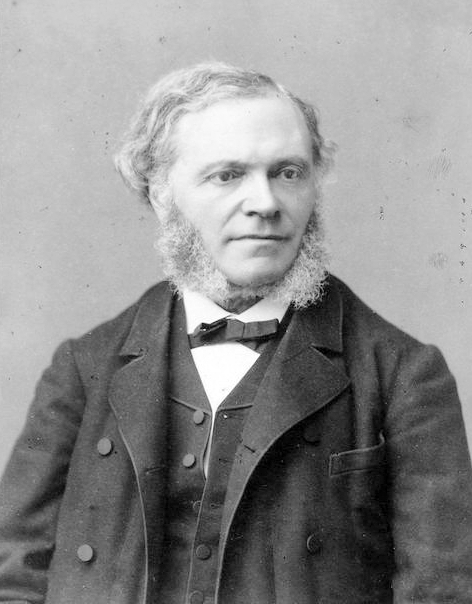
César Franck was a Belgian composer who achieved great success in France. He wrote for orchestra, organ, chamber groups, and solo instruments. He was best friends with Eugène Ysaÿe, who was also Belgian and born in César’s hometown of Liège. Eugène was a big deal in his time. He was considered the “king” of the violin because of his tone, his interpretations, and his presence on stage. In 1886, at the age of 28, Eugène married his first wife, singer Louise Bourdeau. César knew what he would give them as a wedding present: a composition!
Eugène had an idea it was coming; he even encouraged César to make the first movement a bit faster! But even so, it was a rush to get the score of the new sonata for violin and piano to the bride and groom. César couldn’t attend the wedding, and Eugene was supposed to play the new composition at the wedding!
César and Eugène’s mutual friend Charles Bordes presented the score to the newlyweds. Eugene took the manuscript, practiced it quickly with Bordes’ sister-in-law, pianist Marie-Léontine Bordes-Pène, and then played it for the wedding’s guests. Eugène and Marie gave their public debut in Brussels later that year.
For the rest of his career, Eugène performed that sonata. Because of his advocacy, we still play it today. You’d be hard-pressed not to find a recording of this work, and maybe you’re even getting ready to play it!
Like most sonatas, Franck’s Sonata for Violin and Piano is divided into four movements. The first movement is Allegretto ben moderato. It starts slowly, with the main theme first heard in the violin, growing in intensity with dynamics before floating back to the bottom again. The piano and violin go back and forth, developing the melodic line together.
Allegro is intense, almost angry. The piano introduces the melody, which is repeated in the violin. This is the violin’s time to shine and drive the movement to its fiery conclusion. But there is a moment of quiet and contemplation; this theme will be developed fully in Ben moderato: Recitativo-Fantasia. This third movement is slow, reflective, and dramatic, and ends in a way that makes you feel like there’s no hope. But then you get to the Allegretto poco mosso, which has the most hopeful theme you can think of.
This last movement is in canonic imitation, so a combination of a canon and imitation, as there are slight differences between how the piano develops the melody and how the violin develops the melody. The piano states the theme and the violin enters with the theme on the piano’s fifth note, creating a cool doubling. On the one hand, it’s like the piano is trying to get ahead of the violin. But instead of sounding conflicting, it’s unified. Listen for when they switch roles (violin starts and piano enters); how does this impact your expectations?
Not everything is sunshine; the sad, contemplative theme we first heard in the second movement and developed in the third movement appears. But the main theme of this final movement returns and prevails, bringing the work to a triumphant conclusion.
As I mentioned above, there are A LOT of different recordings of this work. Pick three to listen to and decide which ones you like best and why!


