

A. Kori Hill
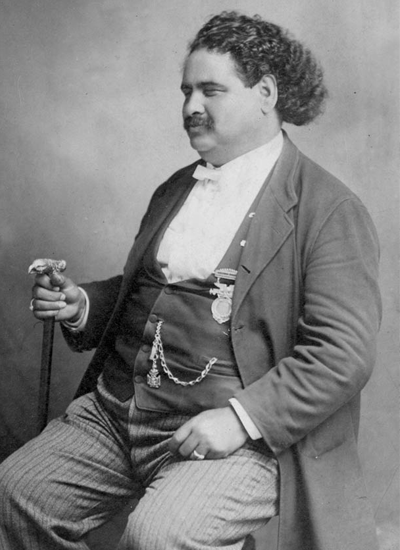
When Florence Price was a little girl, her parents hosted famous African Americans passing through town. Sometimes they’d host famous people like Frederick Douglass and our topic of today, pianist-composer John William Boone.
John William was known by the nickname “Blind Boone;” he had been blind since he was a kid (some say his eyes were removed due to brain fever when he was five or six; others say he lost his sight as an infant). He was beloved for his rags, sentimental works, and virtuosic piano variations on popular tunes like “Dixie” and “Last Rose of Summer.” John William stayed at the Smiths and had a chance to hear Florence play the piano before he gave a house recital for her parents and their guests.
John William was born in 1864 in Missouri. His mother, Rachel, had run away from slavery, and gave birth to him in a federal camp. He was always fascinated with music as a kid, but didn’t start playing piano until he moved to St. Louis to attend the Missouri School for the Blind. He fell in love with the piano to the point where he didn’t want to do his schoolwork! That, paired with the racism of some of the school administrators, led to him running away; eventually he was expelled.
Embarrassed, he stayed in St. Louis, playing piano; but he eventually found his way back to Columbia, Missouri, where he was heard and signed by manager John B. Lange and in 1880, took part in a Christmas piano battle with another famous blind pianist-composer, Thomas Greene Wiggins (also known as “Blind Tom” or Thomas Greene Bethune, after his enslavers).
Whether drawing upon styles like plantation songs or setting popular tunes like “Dixie” and “Last Rose of Summer” as a piano fantasy, John William would wow audiences with his keen ear and virtuosity. By 1900, he was performing 300+ concerts a year in the United States and Canada.
John William recorded several of his works on piano rolls: this is a machine that notates pitches played by the pianist in real time, marking them on a paper roll. There are still some pianos with player rolls today. But a few times, the sessions didn’t go very well. When he came to Cincinnati in 1918 to record some for the Vocalstyle company, they didn’t get recorded well because the company didn’t use the best equipment. Two years later, John William was in Chicago, ready to record his legendarily complicated Marshfield Tornado; but he played so fast and hard that he ended up breaking the piano roll gears!
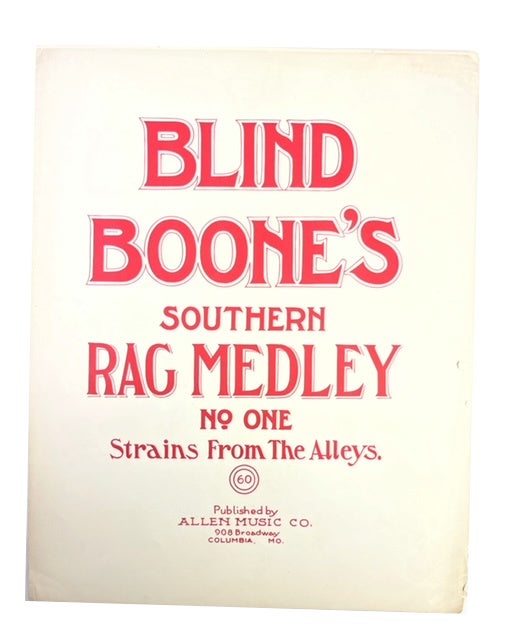
You can still hear some of John William’s music today: his ragtime music, like Southern Rag Medley No. 1 (1908); his vocal music, like “That Little German Band” (1894); and Woodland Murmurs: A Spinning Song (1888), a highly impressionistic character piece. What things do you see as you listen to that piece? What things do you imagine emerging from the forest or woods near your house?
John William reminds us that classical and popular music are always in conversation. Though often understood as a ragtime – and thus a proto-jazz – musician, it’s important to remember he also studied classical music; and like some of his contemporaries (e.g. Scott Joplin), helped shape what we understand American classical music to be.


